

The millennials are between 20 and 35 years old and they haven't lived a life without the internet. They are probably the most progressive, idealistic and tolerant generation the world has seen. Who are they and how are they going to change the world?
 The reason why I am writing this article is that I and the Gugin Research Team believe we are going to see a major cultural change on a global scale that will affect everything from policymaking, the role of the national state to marketing strategies, motivation factors and family patterns.
Most of the cross-cultural research and most consultants in this field use national identities to classify people. If you know Gugin you also know that we have argued against this approach for the past 13 years because all empirical research shows that national identities are becoming less and less important. Recently the Gallup institute published a fairly comprehensive study about the millennial's in the USA.
Millennials have a global mindset, so, therefore, I will assume that the millennial's in the USA are not much different from millennial's in other countries.
Gallup found that 55% of the millennial's in the USA are willing to leave the country while that is only 33% of the population in general. When Gallup asked about patriotism 64% of the middle-aged and elder Americans were very proud of being Americans while only 43% of the millennials were proud of their country. They were not necessarily "not proud" but the concept of patriotism didn't mean a lot to them.
There are 80 million millennials in the USA and despite that, they are treated as a group they are very individualistic and diversified. They have been divided into 6 subgroups shown in the table below
Cultural Changes ahead
This new millennial generation will provoke a number of cultural changes. They have different expectations to their employers (if they choose to have one), different expectations to personal life and they will refuse to submit to the old cultural stereotypes that have dominated the world until now. And personally, I believe that this new generation of well-travelled, curious and open-minded people will make this world a better place.
When Samuel P. Huntington wrote "The Clash of Civilizations" he argued that most of the cultural clashes would happen along the fault lines of the 7 civilizations identified. A lot of researchers has argued that his definitions and clusters made no sense at all - an argument I support. Nevertheless, his stereotype of the world has fueled the strong cultural division between the Arab and the Western World especially after former president George Bush invented the term "The Axis of Terror".
When this new millennial generation gets its foot on the ground in terms of political influence I suspect this kind of division will disappear. These people have studied and travelled around the world, met people from many different cultures and have established personal and business relationship across all the borders and cultural/social boundaries.
How to leverage Cultural Diversity then?
What do we do when we can't put people into groups? Some will continue to put people into the old, obsolete national clusters with the argument that it is the best we have, which in my opinion is totally wrong, while others will try to look for new patterns that go beyond the knowledge we have today. In Gugin we are in favour of that approach, which is why we are conducting a fair amount of research in this field e.g. about how to lead, motivate and assess virtual team performance.
In terms of leveraging the cultural diversity in groups of highly individual people, who don't submit to the established norms of the society there is only one way forward as we see it. Develop organisational models that can contain that diversity and make every individual feel appreciated, valued and motivated.
Get a speech or Workshop on how to welcome the next generation
Book Dr Finn Majlergaard for a speech or workshop on how you can prepare your company culture for a new generation. Unlike previous generations, they are more individualistic, see more opportunities and they move on if they see a better opportunity.
If you want to become the most attractive employer you need to have the right corporate culture. Dr Finn Majlergaard is your expert in that field.
Read more here

I just say things as they are…
I just say things as they are – is a phrase we often hear. It reveals that the person saying it has very low cultural and emotional intelligence
Cross-Cultural Team Development in the Southern French Alps
Team development in the southern French Alps is a great way to develop your cultural competence is in your team together with the Gugin experts
Cultural Intelligence: 5 ways to test a person’s level
We all know them - people, who have been hired because of outstanding professional and technical qualifications, but who, unfortunately, are impossible to work together with. One of the reasons why we have these "talented islans" as we call them in Gugin is because...
Cross-Cultural Leadership The Challenges and Opportunities
Cross Cultural Management is challenging to most managers. This article outlines 3 of the challenges and suggests how you can deal with them
The Real Reason Your Company Can’t Attract Young Talent — And Why It’s a Leadership Problem
companies believe their Gen Z talent problem is a recruitment issue. The research says otherwise. Discover why your ability to attract young talent comes down to one thing most organisations consistently overlook — and what emotionally intelligent leadership has to do with it.
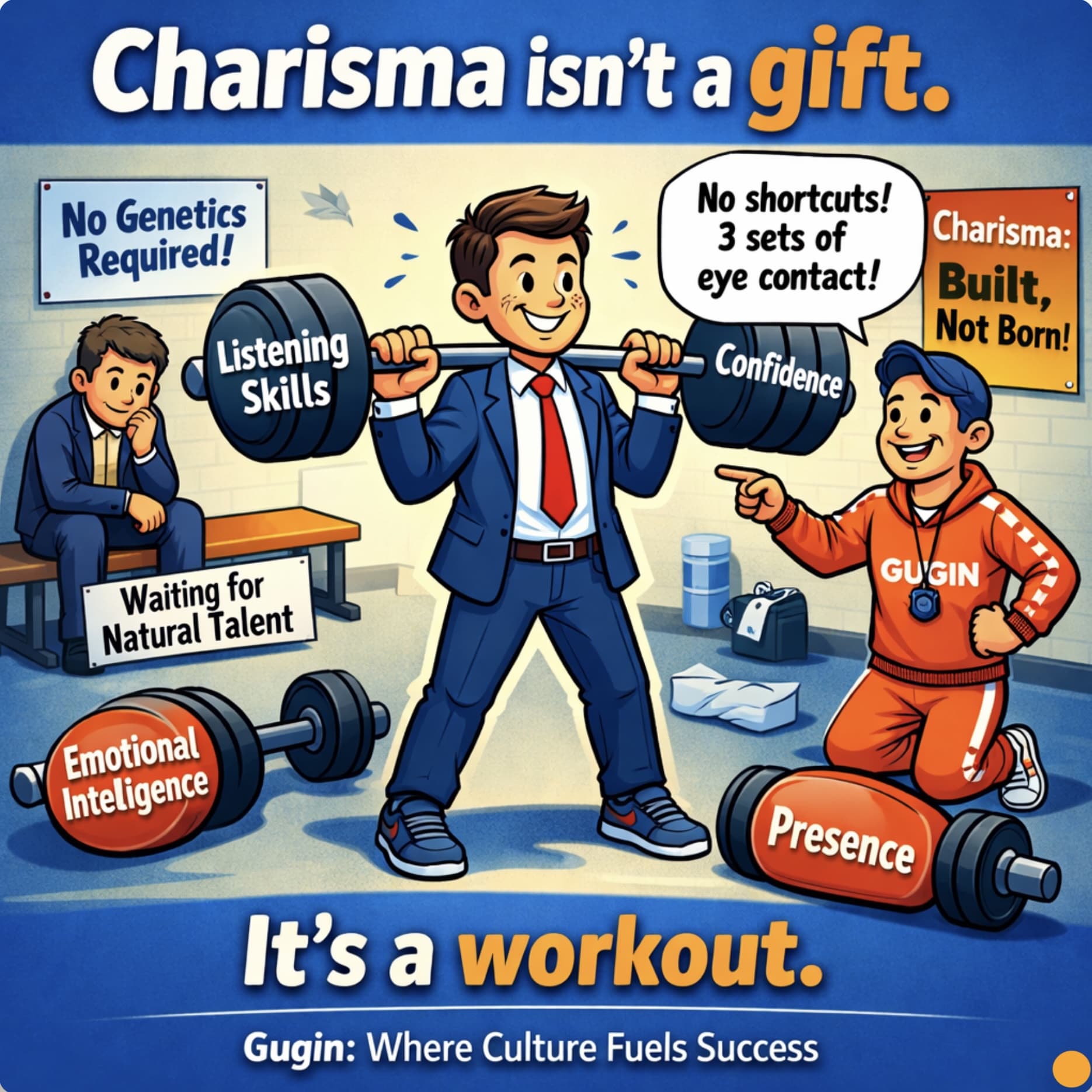
Charisma Is Not a Gift — It’s a Skill. Here’s How Gugin Teaches It.
What separates a good leader from one who truly moves people? Research — and decades of cultural intelligence practice — point to one word: charisma. And unlike talent, charisma can be learned.

Culture Audit – Get the truth about your organisation
A Culture Audit gives you crucial insight into how well your company culture is supporting your strategy and desired values. You might be in for a big surprise