
The cultural challenges in the healthcare industry have to be addressed
I am writing this article because I have received a number of questions and requests for help lately from companies in the healthcare industry about how to deal with cultural challenges in the healthcare industry. It is a dilemma where you on one side have a group of elderly, very experienced healthcare professionals (let us say doctors) and on the other side, we have a group of younger, less experienced doctors. The older doctors often try to resist introducing new technology, because they feel threatened by it or don't believe it is as good as a very experienced doctor. The younger doctors, on the other hand, can easily see the value of the new technology and some might see the new technology as a shortcut to gain the same level of expertise as their elderly colleagues have developed over several decades.
Managing change in the healthcare industry can be challenging because you on one side have best practices we are comfortable with that has been developed over decades and on the other, we have all the new opportunities the new technology gives us. This dilemma often results in conflicts between the older and experienced doctors and the younger but less experienced doctors.
So the question is: How do we facilitate the change process so that the older, experienced doctors don’t block all development and the younger, less experienced doctors don’t rely too much on a new technology that might not work properly.
An example: Introducing new technology in the healthcare industry
Introducing new technology is both an opportunity and a threat. It is therefore important to understand both perspectives if you have been given the task to introduce a new technology. In this article, I will address the cultural and psychological blocks that prevent us from embracing new necessary technology. I will also address why scepticism is good and why we should be happy that not everybody jumps on the techie wagon right away when a new technology is introduced.
Introducing new technology is seen as an opportunity because
- It can reduce the number and impact of human errors. For instance; if today, flying was as safe as it was in 1970 a plane would crash every 15 minutes.
- In the medical field, technology can reduce costs for patients and increase profit for doctors and hospitals
- Introducing new technology is necessary for competitive reasons
- It can be a shortcut to becoming an expert for younger doctors.
Introducing new technology is seen as a threat because
- The skills and expertise you have developed over decades might suddenly become less valuable or even obsolete.
- New technology often disrupts an industry. Just look at what streaming services did to the DVDs and videotapes.
- The professional pride and the professional culture is threatened. You are no longer respected for your merits.
- Can you trust the technology? The fear of losing control is very real.
Cultural challenges in the healthcare industry - a dilemma
The cultural challenge is that the young, less experienced doctors often work closely together with the older, very experienced doctors. Due to the big gap in experience and age (life experience), it is very difficult for the young doctors to introduce new technology or other changes to the well-known routine. That said we also know that not all new technology is perfect and not all new technology has the intended impact on our lives. The scepticism of the older, very experienced doctors is therefore very important and shouldn't be neglected, ignored or overruled.
Instead of ending up in a fight we "just" have to find a way to reconcile the opposing views of the benefits and threats of introducing new technology.
We fear change
All generations fear change, but we fear different kinds of change depending on a variety of different factors. Fear is the most dominant motivation factor influencing all the decisions we make as human beings. In this case, the older doctors fear that they will be pushed out of business by the youngsters + their technology. The younger doctors fear that they will lose the competitive game if they don't introduce new technology. So both groups have fear but very different types of fear.
What can we do when introducing new technology to gain support from most people?
- When starting to look at the Cultural challenges in the healthcare industry we have to recognise, respect and embrace the different perspectives. To be able to do that you need to possess a high level of cultural intelligence.
- You then have to identify the fears the two groups have. That process can be a bit tricky as most of the fears we have are unconscious to ourselves, but they are nevertheless controlling most of our behaviour. When the fears have been identified and made tangible we can relate to them and most possible overcome them, become free of them and move on.
- Then you have to find the potential early adopters in the group that is resisting the introduction of new technology. There are several ways to identify them both through interviews, surveys and pure observation. When we in Gugin are facilitating change processes the early adopters are absolutely necessary to change drivers. If they don't move, no one else moves.
- When the first movers have started to use the new technology by overcoming their fear and with proper introduction and training you need them to tell their story to everybody else. They are the ambassadors and their colleagues will listen to them.
- Almost all members of the "resistance" group will follow and if you have done your homework properly, most of them will be happy with it. When taking a group of people through a change process like this it is crucial that the right support is available 24/7
- When dealing with the cultural challenges in the healthcare industry there will always remain a small group that resist change no matter what. There is no way you can satisfy them and they have no intention to meet you somewhere in between. We have facilitated hundreds of change process and that group will always remain. The only thing you can do is isolate these individuals and make them redundant if possible.
Don't forget the healthy scepticism!
When introducing the new technology listen carefully to the experienced sceptical professionals. For every issue, they raise to pay a lot of attention to addressing it properly. Not only do you show respect to your fellow colleagues you also get a unique opportunity to verify the validity of your own perspective every time to make an effort to answer a sceptical question properly.
The Cultural challenges in the healthcare industry are not unique as a concept but since they literally have to do with life and death, we need to be even better at bringing the different perspectives together to develop even better solutions.
Cultural challenges in the healthcare industry - the two generations are far from each other
In the healthcare industry, the tension between the older and younger doctors is intensifying. New technology is threatening the prestige the older doctors have built up over decades. The younger doctors are frustrated over that new initiatives are blocked due to resistance among the older doctors. The older doctors are frustrated over the younger doctors because they seem to believe too much in the new technology. The older doctors fear that the lack of experience the younger doctors have, potentially could have some negative consequences.
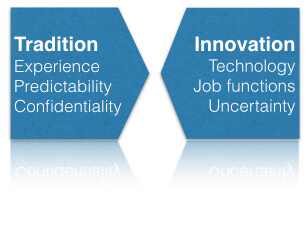
The cultural clash we see in the healthcare sector is not unique at all. There is always a clash between tradition and innovation no matter where you look and I guess most of us have felt it on our own body. Either in situations where we wanted to change something and faced resistance. Or in situations where we were under pressure for changing something we were perfectly happy with.
So the cultural challenges in the healthcare industry are not unique. They are just very exposed to the public for at least 2 reasons:
- We all observe it when we go to see a doctor or get hospitalised. We hear people complaining about each other, the conservatism, the new technology etc
- The healthcare system in many countries is under tremendous pressure. Firstly because the costs are rising rapidly because of increased life expectancy and higher demands for treatments. And secondly, because politicians are trying to find ways to cut the costs without losing voters.
In Gugin we are specialised in resolving situations like this. We work the opposing values and find ways to reconcile them so that younger and older doctors will appreciate each other instead of defending their respective positions.
When we are doing the pre-workshop interviews at e.g. a hospital and we talk to the younger doctors one thing is clear. As much as they want to embrace new technology and develop service concepts, logistics etc. they also want a very experienced doctor to look at them if they one day should need it. When that suddenly become conscious of them the attitude starts to change.
When we interview the older doctors and we start talking about how they wanted to be treated if they got hospitalised they are very clear too. They wanted the new technology to be used on themselves if it can reduce side effects and make a recovery period shorter. That awareness helps to change their attitude too.
With these small changes in attitude, we have a great foundation having a very successful workshop or a very effective consulting engagement with our client
Gugin has developed an intensive workshop that addresses these issues and provides a solution for doctors, hospitals and clinics to use. Here you can read more about healthcare innovation workshop.
I just say things as they are…
I just say things as they are – is a phrase we often hear. It reveals that the person saying it has very low cultural and emotional intelligence
Cross-Cultural Team Development in the Southern French Alps
Team development in the southern French Alps is a great way to develop your cultural competence is in your team together with the Gugin experts
Cultural Intelligence: 5 ways to test a person’s level
We all know them - people, who have been hired because of outstanding professional and technical qualifications, but who, unfortunately, are impossible to work together with. One of the reasons why we have these "talented islans" as we call them in Gugin is because...
Cross-Cultural Leadership The Challenges and Opportunities
Cross Cultural Management is challenging to most managers. This article outlines 3 of the challenges and suggests how you can deal with them
The Real Reason Your Company Can’t Attract Young Talent — And Why It’s a Leadership Problem
companies believe their Gen Z talent problem is a recruitment issue. The research says otherwise. Discover why your ability to attract young talent comes down to one thing most organisations consistently overlook — and what emotionally intelligent leadership has to do with it.
Charisma Is Not a Gift — It’s a Skill. Here’s How Gugin Teaches It.
What separates a good leader from one who truly moves people? Research — and decades of cultural intelligence practice — point to one word: charisma. And unlike talent, charisma can be learned.
Culture Audit – Get the truth about your organisation
A Culture Audit gives you crucial insight into how well your company culture is supporting your strategy and desired values. You might be in for a big surprise