
Executive Summary
For Airlines and Airports IATA has forecasted that passenger demand to double over 20 Years with the fastest-growing markets in Asia and Sub-saharan Africa. This is no surprise that the emerging and frontier market economies account for the biggest growth in the near future. This is great for the aviation industry.
This report is about the future cultural conflicts we identified when we looked at the aviation industry covering Airlines and Airports in general. Here are the key issues we see the aviation industry will need to look at:
- The new growth markets are all in cultures with little tradition for aviation. The entire culture around how to behave in an airport and in an aircraft is developed on European and North American norms and values. All the new growth markets have cultural norms and values that are very different. That will cause cultural clashes, conflicts, unsatisfied passengers, rising costs for the airlines and airports and tremendous pressure on Airlines and Airports to resolve these conflicts.
- Being overweight and obese will challenge Airlines and Airports in the future. In 1995 45% of the US population was overweight. in 2016 it was 73% Almost all countries can record tremendous growth in the number of overweight and obese people. A Harvard study suggests that over 57% of today’s youth will be obese at age 35. They will require more space and time in the airports and many of them will have difficulties fitting into modern economy-class seats. Dissatisfaction, complaints, negative press coverage and political pressure will be inevitable.
- Life expectancy is soaring in many parts of the world. In developed economies more and more elderly people are agile till very late in their lives, they have money and love to travel. But they require more time in the airports going through security and when boarding an aircraft. How will that be perceived by other passengers who are in a hurry to get to the gate as quickly as possible and de-boarding the aircraft as quickly as possible? A conflict between age groups is imminent. Costs for Airlines and Airports will rise too, but who shall pay?
This article covers the three cultural issues in more detail and provides recommendations for what has to be done.
Gugin has the expertise to help your airline or airport develop a winning culture.
Introduction - cultural predictions for Airlines and Airports
Assuming we are all alike is one of the greatest mistakes we human beings are making all the time. Another mistake we constantly make is to assume that our way of doing things is the only right way. So when people do things differently e.g. how people queue up or what we ascribe status to we try to educate them to do or see it our way. This is usually not well received and a conflict starts.
Until today people around the world have agreed mainly on how we should behave in an airport and onboard an aircraft. The passenger growth has been so moderate that all the new passengers adopted the existing behavioural patterns without any major questions.
With the rapid growth in the number of passengers ahead, we will experience a lot of cultural clashes both in the airport and onboard the aircraft because some of the new passenger groups have cultural norms and values far from the existing group of passengers.
Some examples of potential cultural conflicts in Airlines and Airports
- What if one ethnic group insists they have priority over another ethnic group?
- What if a gender insists that it has superiority over the other gender?
- What if a person with one religious belief refuses to sit next to a person with another religious belief?
- What if an obese person claims the right to occupy 2 seats?
- What if some passengers complain about other passengers or a group of passengers’ odour?
- What if a group of passengers gets irritated because of a number of elderly people who needs more time when boarding or de-boarding the aircraft?
The list is endless, so we have to develop a culture where the norms prevent conflicts. We also need to train staff both on the ground and in the air to tackle cultural disagreements before they develop into a conflict.
Your rules don’t matter
You might have rules for how you want your crew and staff to behave in a number of situations, but to your customers, these rules don’t matter.
The only thing that matters to each of your customers is the sense of justice and level of fairness that he or she experiences. That sense of justice and perception of fairness is very
individual based on cultural background, social class, age, occupation, religion, nationality and many other factors.
What will you do to deal with these issues?
When a man has dragged off an overbooked United Airlines plane in April 2017 the entire world became aware of it - simply because there was no feeling of fairness in this decision.
According to the rules Unites Airlines was legally entitled to take the man off the plane. But that didn’t matter to the public. United Airlines lost more than 1 billion USD in market value on top of getting a very bad reputation. They gained some of the money back, but the memories and the bad reputation remain.
With the future trends for passenger growth, we will see a lot more incidents like this and probably also some more severe incidents where it will be a whole group of passengers who feel offended and start a conflict.
You might also like this
Learn more about how Gugin helps Airlines and Airports creating winning company cultures.
3 key cultural challenges for Airlines and Airports
New cultures in the air
According to the IATA report India, China, Indonesia and sub-Saharan Africa are the new fast-growing markets. Africa alone will provide 192 million new passengers by 2013 according to IATA.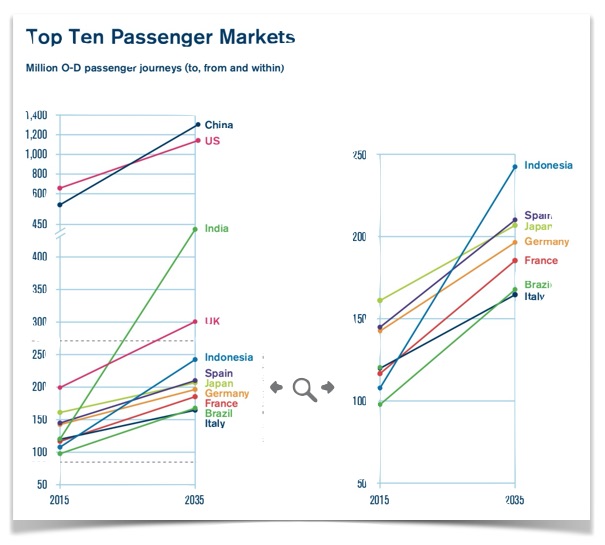
This is of course great news for Airlines and Airports. There are however some challenges associated with these new markets that have to be addressed by both airports and airlines.
While IATA and others are focused on political, legal and economic risks Gugin has looked at the cultural risks and opportunities associated with the rapid growth in relatively new markets. The impact and influence of cultural norms and values are often severely underestimated until they take an organisation down. In the introduction, we mentioned how much the incident at United Airlines cost. There are many other examples like this and a lot more will come partly because we will have more cultural conflicts and partly because the incidents are good stories for the always-hungry media.
New Groups of people will introduce a new culture in Airlines and Airports
Millions of new passengers from emerging and frontier markets will change the way we behave in airports and onboard aircraft. Until recently the steady growth in the aviation industry has predominantly happened in the western world and in affluent social groups elsewhere who could afford to fly either for business or pleasure. That is going to change and the change process has already started.
The existing norms (how we are expected to behave) will come under pressure. A norm is a social contract between a group of people who implicitly agree on how to behave and to who to give privileges and status. It has worked until today because the majority of the travellers are coming from the same cultural super-system. There is a common cultural agreement on equality between genders, religions, ages, races, social classes, etc. There is also a common agreement that priority is given to first- and business-class passengers and frequent flyers irrespectively of their genders, religions, ages, races, social classes, etc.
That common understanding will be challenged. We regularly witness incidents where people with one religious belief won’t sit next to people with a different religious belief. We often see conflicts related to gender where it is a problem that men and women are sitting next to each other. During our research, we have also found examples of conflicts that originated from race differences.
When large numbers of people with new norms and values are joining a culture that has remained pretty much unchanged for 60 years it will cause cultural dilemmas and potential conflicts.
How we deal with these cultural dilemmas and resolve the conflicts will greatly impact how customers, employees and all the external stakeholders perceive the airline or airport.
- Your passengers will not judge you by to which degree you follow your internal rules. They will judge you by how fair you treat them and other passengers.
- Your employee satisfaction is highly influenced by how much empowerment each group and each person has. The more they are trusted to find a solution the more satisfied they are with their job and the more satisfied will the passengers be.
There is a proven correlation between employee satisfaction and customer satisfaction just as there is a proven correlation between customer satisfaction and profitability.
You might also like this
Why you should always bring a hard case on board in the cabin
More passengers will claim that their cultural values are superior to your rules
It is predicted that more cultural clashes will arise as new large groups of people will start flying.
We will see people who will try to extend the privileges they have due to the status in their local community in the airport and on board the aircraft. It will be people or groups of people who will claim a special status because of their race, gender, social class, religion or sexual orientation.
They will object to waiting in line with other passengers and will not respect the FIFO principles. Neither will they respect the privileges that are given to first- and business-class passengers and frequent flyers.
The equality norms will be challenged
Passengers who are coming from or have a preference for diffuse hierarchical cultures will find it difficult to accept the transparent and universal hierarchies that exist in today’s passenger groups. Today almost everybody accepts that some passengers have privileges because of their travel class or their travel frequency. But we would not accept that some passengers had privileges because of their race, gender or religion.
More overweight passengers will require more space
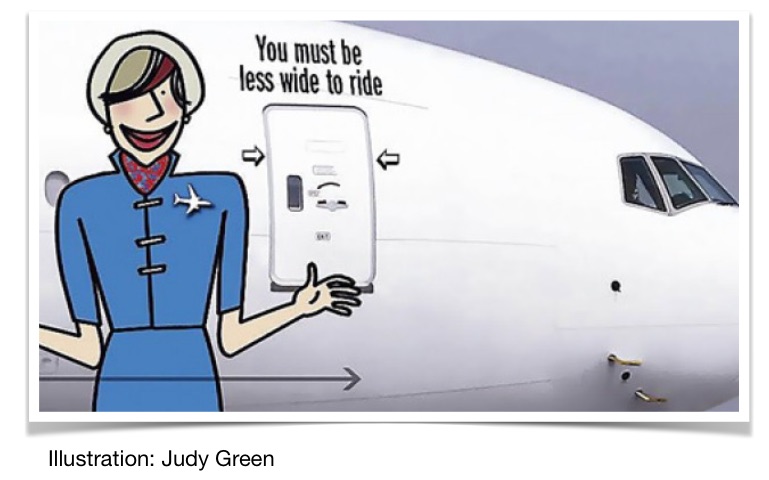
One person, one fare, one seat. This has been the guiding formula for air travel since the early days of commercial aviation. But what happens when one person can't fit in one seat?
Last November, after a six-year legal battle, Canada's domestic airlines were forced to comply with an FTA rule instituting a one-person, one-fare policy that would see obese passengers receive an extra seat at no extra charge. The argument was that obesity is a disability and it would, therefore, be discrimination if they were charged more.
OECD predicts that 50% of the US and 35% of the global population will be obese by 2030. Apart from the obvious challenges for the healthcare systems, the rapid growth in the number of obese people will also challenge the aviation industry.
With airlines trying to squeeze more and more people into the aircraft - at least in economy class - there will be more and more people who cannot fit into their assigned seats. This is not only a problem for the obese person but also for the people sitting next to her or him.
Boarding and de-boarding will also be slowed down, which might make the other passengers irritated and stress the crew who try to make sure the aircraft can depart on time. It will lead to higher costs and a decrease in employee- and customer satisfaction.
The cultural dilemmas are queuing up
There is an ongoing discussion about fairness. Is it fair that a 50kg passenger shall pay extra charges if his or her luggage is 5kg too heavy, while a 170kg passenger pays the same price for the ticket as the 50kg passenger?
What is most fair?
- 1 seat, 1 person, 1 price
- 1 price per kg passenger and luggage combined
There are policies and laws to follow. But these factors are totally separated from people’s sense of fairness. Both of the options above are fair. Each person’s norms and values will determine which of the 2 options that are considered most fair.
When two value systems are colliding we have a cultural conflict that needs to be resolved before it escalates. We will probably see a division where one part will defend the obese and overweight people to get the space and time they need at no extra cost. The other part will argue it is unfair they have to pay as much as overweight people. They will also complain about being squeezed. This is a dilemma based on core personal values. Therefore it cannot be resolved by communication rules and company values. The issue has to be tackled in a very different and culturally intelligent way.
If you manage to develop the right cultural norms and values you can avoid conflicts. We human beings accept almost everything as long as it is within the borders of cultural norms.
Elderly people will fly a lot more and they want respect
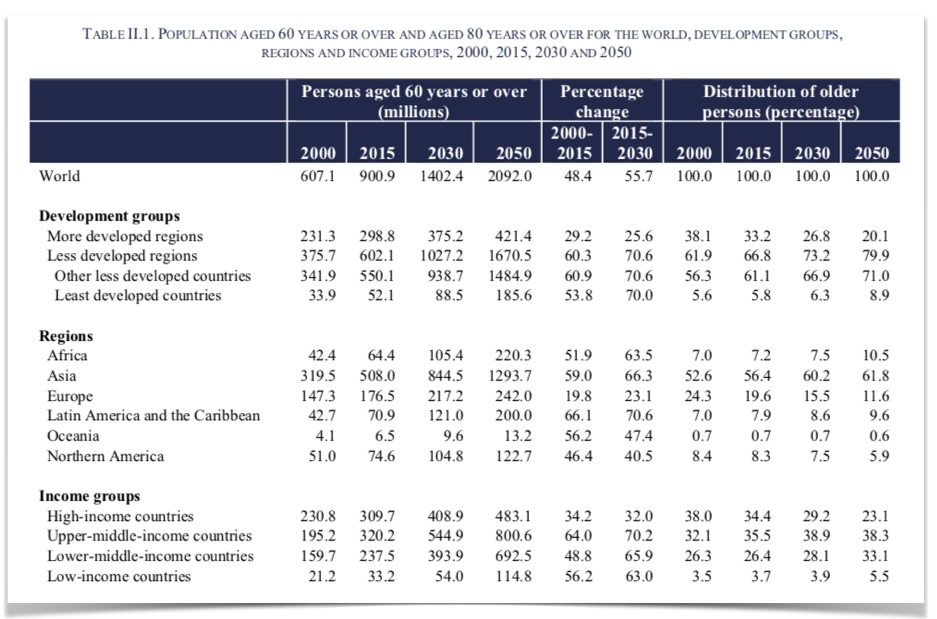
The number of elderly people is growing rapidly across the world due to better healthcare and lifestyle changes. In the year 2015, there were 900,9 million people over 60 years old. That number will increase to 2.092 million in the year 2050 according to a UN report (3). Not only will we get a lot more elderly people, but many of them will also travel because they have money and relatively good physical health.
That is, of course, good news for the aviation industry but there are some cultural challenges that need to be addressed.
Similar to the issue of obese and overweight people a lot of elderly people will require more time, assistance and more space when boarding and de-boarding the aircraft. They will need more help from the flight crew to get settled in their seat.
The crew will feel in a dilemma because they only have limited time and resources during the boarding the de-boarding process. They also have to pay attention to all the other passengers while doing all the other tasks.
One side of the dilemma is that the elderly passengers will feel that they get bad service, but the crew simply don’t have the time or resources to assist all of them. The other side of the dilemma is that the other passengers will get irritated that the boarding and de-boarding process takes a lot longer than it used to. Most passengers will understand that elderly people need more time and space but only to a certain extent. Beyond the border of tolerance, it is expected that the airport and the airline find alternative solutions.
The big question is, how do we secure that all passengers get a positive experience while the turn-around time in the airport can be kept down and the flight crew have sufficient time to do everything they have to do?
The solution will require a paradigm shift in customer service and in operation management.
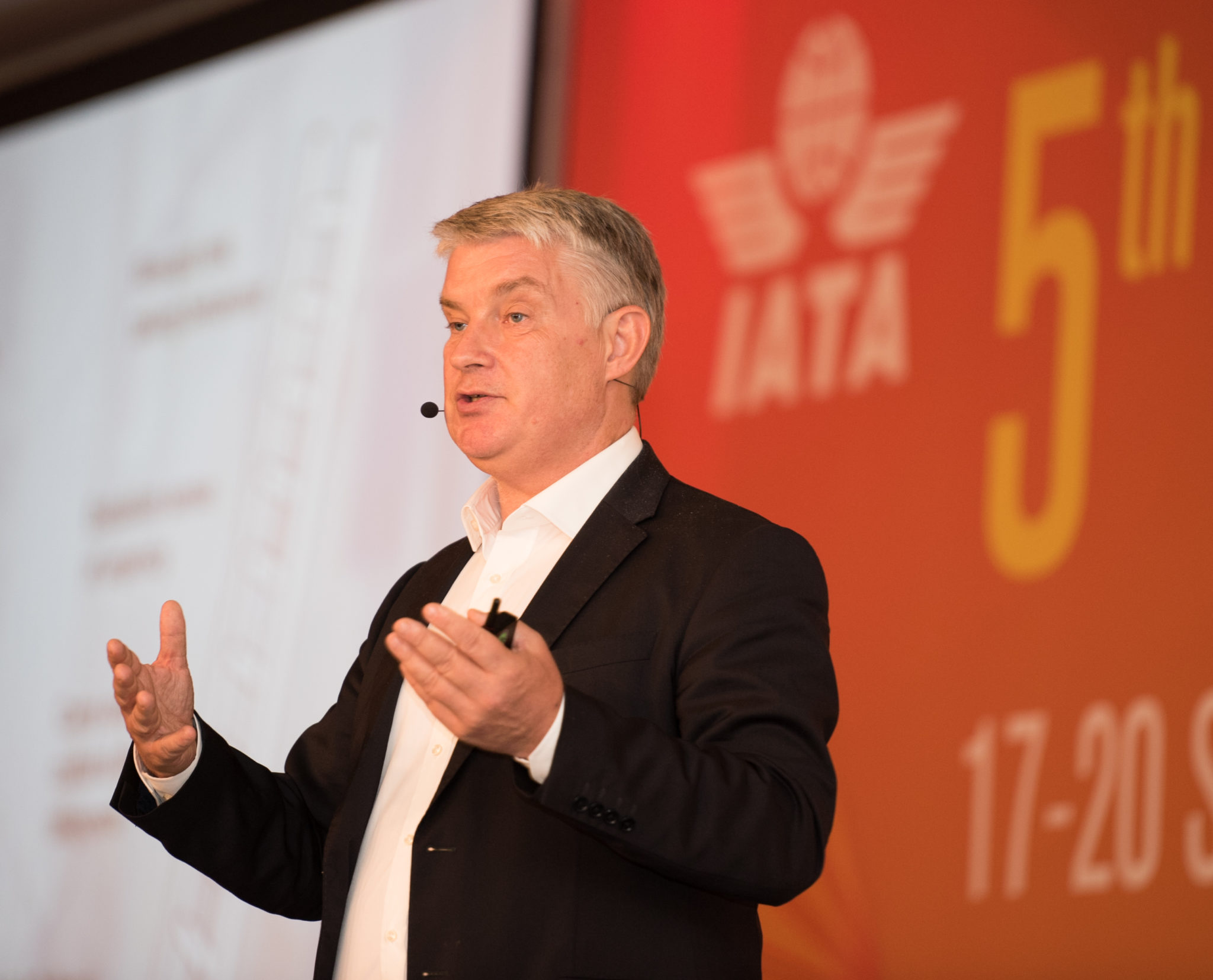
Book Dr Finn Majlergaard to inspire your leadership team
Book Dr Finn Majlergaard for a speech on how global and regional cultural changes will affect the aviation industry. You will also learn how you can turn these changes into new opportunities
You might also like this
Read how a bad company culture can cost an airline a huge part of its market value and reputation in no time
How to address the issues
When you need people to accept a new reality you have to plan it carefully with small steps of change where the change in values follows the change of behaviour. It is called the cultural adaptation function and it happens to all cultures. National cultures, corporate cultures, professional cultures, etc. They all change gradually over time in order to remain relevant to the people who are part of a particular culture.
Examples of change in culture
- A couple of decades ago the workers in most breweries drank a lot of beer while they were at work. Some even had that right written down in the labour agreement with the brewery. We don’t see that any more. The culture has changed completely
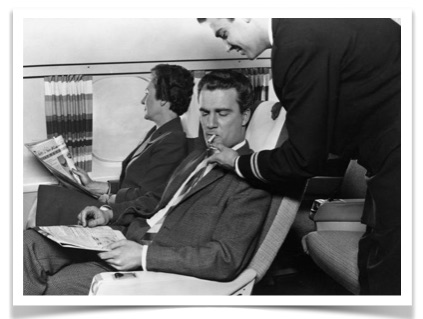
- You are not allowed to smoke on board aircraft or in the airports (except designated areas) anymore. Today the vast majority of smokers accept that without complaining. But it hasn’t always been like that. Rules combined with a change in the norm about what is acceptable behaviour made the transition fairly smooth. We began to understand the dangers of smoking and the risks of smoking onboard an aircraft imposed on safety. All these factors played together in making the transition happen over a relatively short period of time.
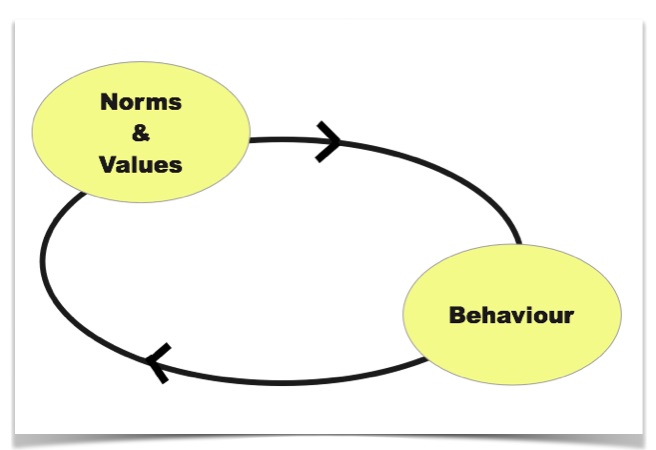
When a group of people change behaviour or a large group of people with a different behavioural pattern join a culture, the norms and values will change. But it also works the other way around. When the norms and values change e.g. because of new knowledge, a new generation or changes in one of the macro drivers people’s behaviour will change accordingly. The feeling of fear makes people change their behaviour irrespectively of whether that fear is real or not. The new groups of people from predominantly emerging and frontier markets who are going to fly will affect and change the culture in the airports and onboard the aircraft. The increasing number of obese and overweight people will also lead to cultural change. The increasing number of elderly people who will be flying will change the culture too, but we don’t predict that cultural change to become as dramatic as the first two groups.
What shall airlines and airports consider?
As change is inevitable you have to decide whether you want to influence and control the change process, or you want to remain responsive to whatever happens.
If you decide to stay ahead of the game and try to lead the cultural change in a favourable direction you have to plan ahead and control the execution very carefully. If you go too slow people will not change their behaviour and if you go too fast people will discover what you are up to and resist the change.
Gugin has facilitated cultural change processes for companies and organisations around the world since 2001 and we will be very happy to work with you too. There are a number of macro drivers that affect all industries. It is political, economic, social, technological, cultural, environmental and legal drivers. They influence each industry differently, but they do influence you and your industry whether you like it or not.
At the industry level, we have a number of additional drivers we have to take into consideration. You can influence any of these drivers but your response to them will determine how well you as an airline are positioned in the future.
So if you can facilitate a cultural change that prepares you for the future reality you are in a much better position than your competitors. Anyone can fly a person from A -> B but only your airline can give that person a unique experience.
What now?
We will look forward to hearing from you and discuss how we can work together on a cultural transformation of your airline.

Dr Finn Majlergaard
CEO Gugin, Professor, Author, Keynote Speaker, Author
- We align your corporate culture with your strategy.
- We take you safely through major changes in your organisation.
- We develop the crucial cultural intelligence in your organisation by training your employees and leaders
- We help you develop a competitive advantage with a unique corporate culture
Gugin has helped more than 600 companies around the world creating a winning corporate culture.


I just say things as they are…
I just say things as they are – is a phrase we often hear. It reveals that the person saying it has very low cultural and emotional intelligence

Cross-Cultural Team Development in the Southern French Alps
Team development in the southern French Alps is a great way to develop your cultural competence is in your team together with the Gugin experts

Cultural Intelligence: 5 ways to test a person’s level
We all know them - people, who have been hired because of outstanding professional and technical qualifications, but who, unfortunately, are impossible to work together with. One of the reasons why we have these "talented islans" as we call them in Gugin is because...
Cross-Cultural Leadership The Challenges and Opportunities
Cross Cultural Management is challenging to most managers. This article outlines 3 of the challenges and suggests how you can deal with them

The Real Reason Your Company Can’t Attract Young Talent — And Why It’s a Leadership Problem
companies believe their Gen Z talent problem is a recruitment issue. The research says otherwise. Discover why your ability to attract young talent comes down to one thing most organisations consistently overlook — and what emotionally intelligent leadership has to do with it.

Charisma Is Not a Gift — It’s a Skill. Here’s How Gugin Teaches It.
What separates a good leader from one who truly moves people? Research — and decades of cultural intelligence practice — point to one word: charisma. And unlike talent, charisma can be learned.

Culture Audit – Get the truth about your organisation
A Culture Audit gives you crucial insight into how well your company culture is supporting your strategy and desired values. You might be in for a big surprise