

What is Organisational Culture Nudging
Organisational culture nudging is a concept where we can alter people's behaviour in a predictable way without forbidding them to choose other options. It is used a lot in architecture where you want people to move in a specific way and pace in a building. Nudging is a concept defined and developed by Thaler and Sunstein for use in architecture.
We took organisational culture nudging up in Gugin the first time in 2010 when we launched a research project on why change and cultural change is so difficult. So we decided to find out how we could adopt Thaler and Sunstein's concept of cultural change processes in organisations. We called it organisational culture nudging. This article is about what it is and how we work with it with our clients.
Why did Gugin develop Organisational Cultural Nudging?
We human beings associate change with risk. So whenever somebody is mentioning change it 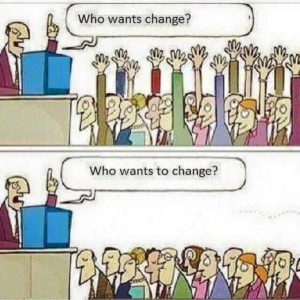 imposes a conscious or subconscious fear in us. Suggestions on even the smallest changes make us anxious. Yet we are told all the time we have to embrace change and phrases like Heraclitus of Ephesus' "The only constant is the change" makes scores of people paralysed. A lot of CEO's like to use that phrase when they want to prepare their organisation for change. They usually like to use it because the changes apply to everybody except the CEO usually. When that phrase is used everyone is terrified, but nobody says anything because they don't want to be perceived weak or retroactive. We have to love change - right?
We should stop using the word "change" because almost everybody associates it with fear. That is why Gugin developed the organisational culture nudging concept - a concept we use in almost all our projects where we have to facilitate the development and implementation of a new culture
How does culture nudging by Gugin work?
All our behaviours are closely connected to the underlying values, norms and basic assumptions in our belief system. Everything we do makes sense to ourselves (but not necessarily to anyone else). Usually, our behaviour makes sense to other members of the same culture
A culture nudging example
The cleaning staff at a hotel get paid by how many rooms they clean. It is very specific what they have to do in each room. Yet, the guest ratings are far from satisfactory. A lot of guests are complaining about the cleaning and the friendliness of the cleaning staff.
Obviously, the cleaning staff wants to earn as much money as possible in the shortest amount of time. They, therefore, don't have any desire to accommodate and special needs. Neither do they feel any responsibility for giving the guests a good service when they meet each
We implemented a nudge, that made everything turn around nicely. We made the hotel offer each guest a free drink in the bar in the evening if they brought the room quality survey from their room. A lot of the guests welcomed the offer and they usually bought additional drinks after their free drink so the revenue in the bar went up dramatically and it suddenly became a very lively area, that attracted even more people. No one wants to go into an empty bar.
The payment model for the cleaning staff was changed. They still got paid depending on how many rooms they cleaned, but on top of that, they got a bonus if they had good reviews. So mentally they went from just focusing on cleaning as many rooms as possible to also take responsibility for the customer satisfaction level.
The cleaning staff made more money, the guest ratings went up with 15% and the revenue increase in the bar could easily fund the pay raise to the cleaning staff.
So organisational culture nudging is all about motivating people to change their behaviour in such a way that the new, desired behaviour fits the values, norms and basic assumptions even better.
We have worked with hundreds of cases and they are all different and requires a fair amount of creative thinking and testing before we have an organisational nudge that works well. All companies are different, all professions are different so an organisational culture nudge can never be an off-the-shelf commodity.
Typical examples where organisational culture nudges work well
Almost none the cultural conflicts we have worked with over the years have been rooted in different nationalities. Most of them have been rooted in different professions followed by differences in organisational cultures when we are facilitating integrations after mergers or acquisitions.
So here are some examples where organisational culture nudging works well:
- When you want the sales people and the product development people to follow the same goals and objectives
- When you have multiple equally important objectives to pursue e.g. best and cheapest
- When you have a lot of rules but need to make a lot of exceptions in order to function
- Bridging generation gaps where young and mature professional have very different opinions about what is the right thing to do. The experience versus innovation dilemma.
- When you have young and experienced leaders in the same part of the organisation. Combining new thinking with experience is an ideal task for a creative organisational cultural nudge
- When you want to promote and fuel innovation and knowledge sharing in the organisation.
We hope you found cultural nudging inspiring. Please do get in touch here. We will love to hear about your ideas for cultural nudging.
Learn Cultural Nudging
Let Gugin teach your organisation how to use cultural nudging to facilitate minor changes to your organisation. Click on the image to the right to learn more and feel free to contact us any time when you have questions

Dr Finn Majlergaard
CEO Gugin, Professor, Author, Keynote Speaker, Author
- We align your corporate culture with your strategy.
- We take you safely through major changes in your organisation.
- We develop the crucial cultural intelligence in your organisation by training your employees and leaders
- We help you develop a competitive advantage with a unique corporate culture
Gugin has helped more than 600 companies around the world creating a winning corporate culture.


I just say things as they are…
I just say things as they are – is a phrase we often hear. It reveals that the person saying it has very low cultural and emotional intelligence

Cross-Cultural Team Development in the Southern French Alps
Team development in the southern French Alps is a great way to develop your cultural competence is in your team together with the Gugin experts

Cultural Intelligence: 5 ways to test a person’s level
We all know them - people, who have been hired because of outstanding professional and technical qualifications, but who, unfortunately, are impossible to work together with. One of the reasons why we have these "talented islans" as we call them in Gugin is because...
Cross-Cultural Leadership The Challenges and Opportunities
Cross Cultural Management is challenging to most managers. This article outlines 3 of the challenges and suggests how you can deal with them

The Real Reason Your Company Can’t Attract Young Talent — And Why It’s a Leadership Problem
companies believe their Gen Z talent problem is a recruitment issue. The research says otherwise. Discover why your ability to attract young talent comes down to one thing most organisations consistently overlook — and what emotionally intelligent leadership has to do with it.

Charisma Is Not a Gift — It’s a Skill. Here’s How Gugin Teaches It.
What separates a good leader from one who truly moves people? Research — and decades of cultural intelligence practice — point to one word: charisma. And unlike talent, charisma can be learned.

Culture Audit – Get the truth about your organisation
A Culture Audit gives you crucial insight into how well your company culture is supporting your strategy and desired values. You might be in for a big surprise