
The Real Reason Your Company Can’t Attract Young Talent — And Why It’s a Leadership Problem
By Dr. Finn Majlergaard, Founder, Gugin
Something is happening in the talent market that no amount of competitive salary packages or flexible working policies will fix on its own. Companies across every sector are struggling to attract and retain Generation Z — and most of them are looking for the solution in the wrong place.
They are tweaking job descriptions. Updating career pages. Adding a few ESG bullet points to the employer brand. But the data tells a different story about what young people are actually looking for.
And the answer leads directly back to leadership.
The Numbers Are Stark
Generation Z now represents roughly 18% of the global workforce and will reach 30% by 2030. By 2025, they already outnumbered Baby Boomers in active employment. This is not a future workforce issue. It is a present-tense crisis.
Yet according to LinkedIn research, attracting Gen Z is the second biggest challenge for recruiting teams over the next five years. 53% of employers struggle to retain Gen Z employees once hired. 80% of executives admit they have no strategy in place to attract and retain this new generation of talent.
The average Gen Z employee stays in a role for just 1.1 years. Compare that to 1.8 years for Millennials, 2.8 for Gen X, and 2.9 for Baby Boomers. The revolving door is not a coincidence. It is a signal.
What Gen Z Actually Wants
This generation is not primarily motivated by a pay cheque. According to Deloitte’s 2025 Gen Z and Millennial Survey — drawing on over 22,000 respondents across 44 countries — the three defining factors for Gen Z when evaluating a job opportunity are meaning, money, and well-being. In that order.
More than eight in ten young professionals say purpose is important for their job satisfaction. 44% have rejected a job offer or an assignment on the basis of personal ethics. 83% say they will not even apply for a role if a company fails to clearly communicate its values.
And here is the piece most companies are missing entirely: **57% rank the authenticity of leadership as a top reason to accept or reject an offer**.
Not the brand. Not the benefits. The leader.
Gen Z is the first generation to have grown up with full information access. They research prospective employers the way previous generations researched product purchases — reading Glassdoor reviews, analysing LinkedIn content, cross-referencing what a company says against what its leaders actually do. You cannot fake your way through this scrutiny. Either your leaders embody what your organisation stands for, or they do not. And young talent will find out.
The Leadership Gap Not Many Leaders Are Talking About
There is a profound irony at the heart of the current talent crisis. Companies are investing in employer branding, DEI initiatives, and flexible working frameworks — and still haemorrhaging young talent. The reason is that these are structural fixes for what is fundamentally a human problem.
Young professionals do not leave companies. They leave leaders.
You may not remember what a leader said to you five years ago. But you will always remember how they made you feel. That distinction is not sentimental. It is neurological. And it sits at the core of why some leaders attract loyalty, commitment, and discretionary effort — while others, regardless of their technical competence, drive talented people out of the door.
The research is unambiguous. A meta-analysis pooling results from 12 studies with 2,764 participants found that the higher a leader’s emotional intelligence, the better their team performed — with EI accounting for almost 25% of the variability in performance. A larger meta-analysis across more than 65,000 entrepreneurs found that those higher in emotional intelligence achieved better financial outcomes, stronger firm growth, and greater organisational scale. Crucially, EI’s impact was more than twice as high as IQ.
This is not a soft skill. It is a competitive advantage.
Charisma Is Not a Gift. It Is a Skill.
There is a persistent myth that charismatic leadership is innate — something you either have or you don’t. The evidence disagrees.
A quantitative study of 249 postgraduate management students found that emotional intelligence significantly predicted charismatic leadership communication, explaining 32% of the variance. Emotional intelligence is learnable. And where EI goes, charisma follows.
Research on emotional communication confirms that people with strong emotional communication skills have more friends, are more socially successful, are better at emotional contagion — spreading their feelings and energy to others — and are more likely to emerge as natural leaders. These are not personality traits. They are capabilities that can be developed, practised, and embedded.
For organisations trying to attract and retain Gen Z, this matters enormously. Young professionals are not looking for the most technically accomplished leader in the room. They are looking for the one who sees them, communicates with authenticity, and makes them feel that their work has meaning. They are looking for someone with emotional intelligence and the presence to act on it.
What This Means for Your Organisation
The companies that will win the talent competition in the next decade are not necessarily those with the biggest budgets or the most famous brands. They are those whose leaders can do something simple but rare: make people feel that they belong, that they matter, and that the work they do connects to something larger than a quarterly report.
That requires cultural intelligence — the capacity to read and navigate human difference across generations, backgrounds, and values systems. It requires emotional intelligence — the ability to regulate one’s own emotions, understand others’, and respond in ways that build rather than erode trust. And it requires the kind of leadership presence that Gen Z is specifically calibrated to detect and respond to.
These are precisely the capabilities that most leadership development programmes neglect. Companies invest heavily in strategy, operations, and technical upskilling. They underinvest — consistently and significantly — in the human dimensions of leadership that determine whether talented young people choose to stay.
How Gugin Can Help?
For over 23 years, Gugin has worked with leaders and organisations across more than 60 countries on exactly this challenge. We combine research-grounded frameworks with intensive, experiential development programmes designed to build emotional intelligence, cultural intelligence, and charismatic leadership capability — not as theory, but as embodied practice.
Our programmes are deliberately different from conventional leadership training. We facilitate in unusual settings — often outdoors in the southern French Alps — because genuine development requires removing people from their habitual environments. We customise every engagement to the specific culture, challenges, and ambitions of our clients. And we do not just teach concepts. We work with leaders through the hardest part: the moment of actual behavioural change, when the old habits reassert themselves and the new capabilities need to hold.
The result is leaders who can walk into a room — or a Zoom call — and make people feel something. Leaders who communicate with authenticity, navigate generational and cultural difference with intelligence, and build the kind of trust that translates directly into retention, engagement, and performance.
If your organisation is struggling to attract young talent, the conversation about what to do next should start with your leaders — not your job postings.
Gugin works with senior leaders and organisations worldwide on cultural intelligence, emotional intelligence, and charismatic leadership development. To explore what a tailored programme might look like for your team, visit gugin.com or contact us directly here

Dr Finn Majlergaard
CEO Gugin, Professor, Author, Keynote Speaker, Author
- We align your corporate culture with your strategy.
- We take you safely through major changes in your organisation.
- We develop the crucial cultural intelligence in your organisation by training your employees and leaders
- We help you develop a competitive advantage with a unique corporate culture
Gugin has helped more than 600 companies around the world creating a winning corporate culture.


I just say things as they are…
I just say things as they are – is a phrase we often hear. It reveals that the person saying it has very low cultural and emotional intelligence
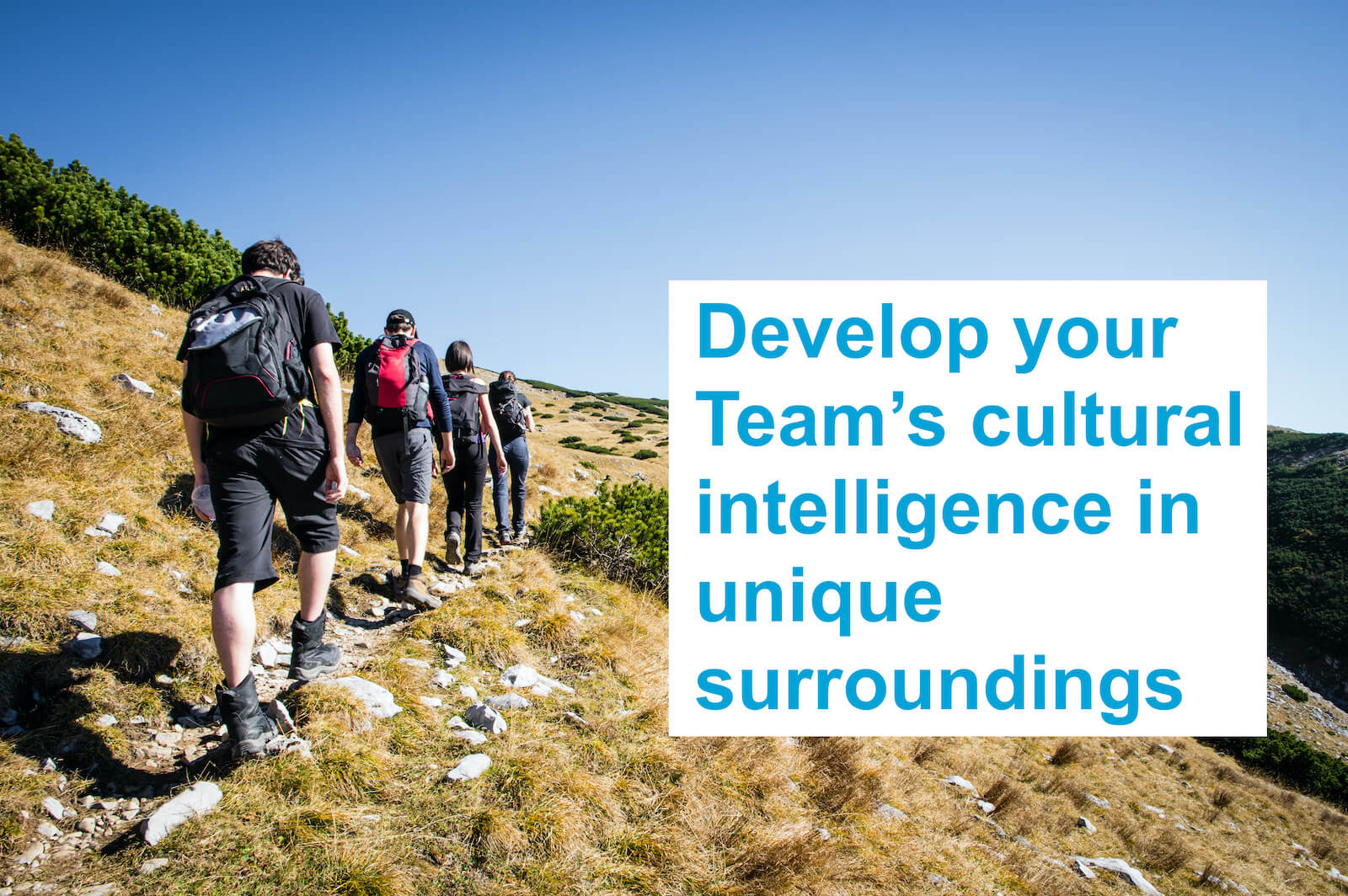
Cross-Cultural Team Development in the Southern French Alps
Team development in the southern French Alps is a great way to develop your cultural competence is in your team together with the Gugin experts
Cultural Intelligence: 5 ways to test a person’s level
We all know them - people, who have been hired because of outstanding professional and technical qualifications, but who, unfortunately, are impossible to work together with. One of the reasons why we have these "talented islans" as we call them in Gugin is because...
Cross-Cultural Leadership The Challenges and Opportunities
Cross Cultural Management is challenging to most managers. This article outlines 3 of the challenges and suggests how you can deal with them
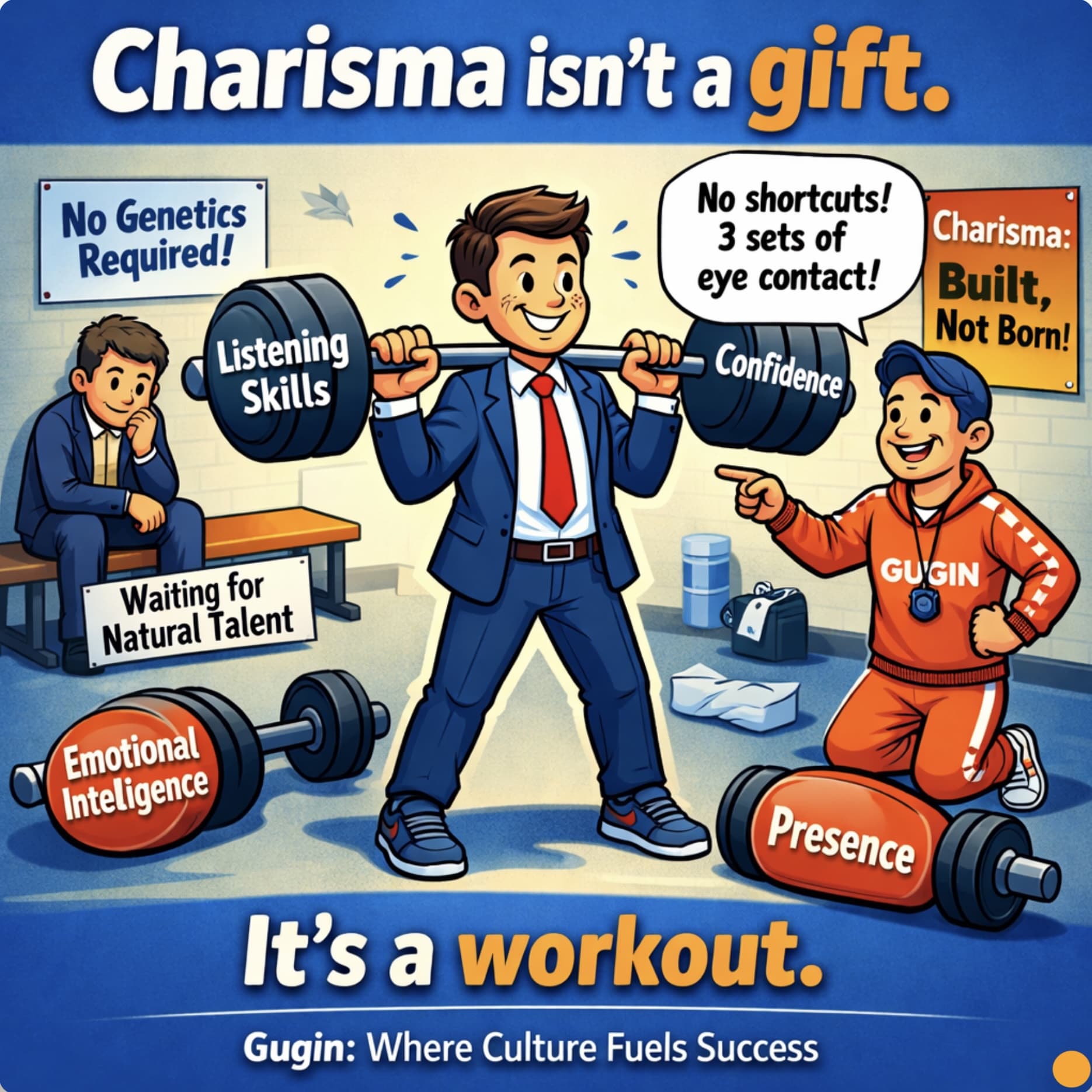
Charisma Is Not a Gift — It’s a Skill. Here’s How Gugin Teaches It.
What separates a good leader from one who truly moves people? Research — and decades of cultural intelligence practice — point to one word: charisma. And unlike talent, charisma can be learned.

Culture Audit – Get the truth about your organisation
A Culture Audit gives you crucial insight into how well your company culture is supporting your strategy and desired values. You might be in for a big surprise

USA walks from one disaster to another as it lacks emotional- and cultural intelligence
USA walk from one disaster to another as it lacks emotional- and cultural intelligence. As the world is becoming multipolar, USA is a a lot more disasters that only in their wars.