

When Innovation dies
Organisations and individuals alike want to become innovative. But once they are there they don't notice when innovation dies. It is because it happens quietly without anyone noticing it. Gugin helps you create and maintain an innovation culture so your innovation power doesn't die a slow, unnoticable death.
Some are really innovative, while even more claim they are innovative. When something we thrive for both as individuals and as organisations is finally achieved the even bigger battle begins. Remaining innovative is so much harder than becoming it. That is why we see so many companies and individuals, who fall down from the peak very rapidly.
I am writing this article because we have just witnessed a brilliant or tragic (depending on perspective) example some time ago. Apple had its annual presentation of its new iPhones etc. Both Tim Cook and the product managers said exactly the same thing as last year and the year before. "It is the fastest iPhone we have ever built", "The battery lasts longer than ever before" etc. What was different this year was, that you could hear that both Tim Cook and Philip W. Schiller had lost the enthusiasm. They knew they were repeating themselves and they could feel the disappointment from the audience. We expect Apple to be different.
I still remember in 2007 when the first iPhone came out. I needed to have it. I remember when the coloured, cute iMacs came out. I needed to have one. I remember when the white iMac with the screen on an arm came out. I needed to have one. I haven't felt that need for a very long time. I have an antique iPhone, which does what I need and I don't change it as long as it is alive.
Why does innovation die?
Innovation dies because it loses reason. We, both individuals and organisations become innovative because we have to not because we want to. Just think about how creative prisoners have been throughout history when they have escaped prison. Think about how creative people become during difficult times. Apple became creative because Steve Jobs had a mission. They were the underdogs and he wanted Apple to succeed and win. And they did. Today Apple has nothing to fight for, nothing to prove. It is one of the most admired companies in the world. They still make great products and the integration between them is great. I love them and have no plans for switching. But I still miss that wow feeling I often had in the old days when the revolutionised the It industry.
Maturity is not the only reason why innovation dies. In fact, it doesn't have to be a reason at all. But the organisational culture change is. When you go from an innovative challenge culture to a self-satisfied mature culture you can't maintain a high level of innovation. The change in corporate culture kills innovation.
How can an organisation be mature and still innovative?
Creating, nursing and maintaining creative organisational cultures has been something we have been helping our clients with since the early days of Gugin, Here is a list of factors that influences your ability to remain a creative organisation over a long period of time
- Let people go, even the high performers, the bosses and the old heroes. The heroes in the company who invented the groundbreaking products or services have to leave before they become a liability. Even with their best intentions, they will become a liability because they have a natural authority that only few will challenge. That stops new ideas and new paradigms to emerge and with them a new culture.
- Split the organisation into smaller autonomous entities that are free to experiment with new products, leadership models, strategies, motivation models, etc. Everything must be subject to change.
- Force diversity into all teams at all levels. I am not talking about gender, but all sorts of diversity. Get people on board who are most sceptical about what you are doing and let them challenge you. Get people on board who have no clue about what you are doing. Miracles will happen. That is guaranteed. So are the disasters, but you will win in the end.
- Find new (real) challenges all the time and stay committed to those challenges.
- Do really, really crazy things. Whenever an established order is growing in the organisation, kill it. We have a whole catalogue of things you can do to shake up the organisation. The feeling of uncertainty and unpredictability fuels innovation.
- Use cultural nudging to shake up behaviours and push people gently out of their comfort zones on a regular basis
- When the organisation leans to rely on its culture instead of its rules you are close to having the right culture. But it takes time, energy and sacrifices.
Alternatively, you can decide just to become a cash cow that makes the owners wealthy until you perish. But hey! Life is too short for that - don't you agree?
At Gugin, we help companies keep their innovation alive by building and nurturing the right company culture. Innovation doesn’t happen in a vacuum—it thrives in environments where curiosity, collaboration, and psychological safety are actively cultivated. We work closely with organisations to identify cultural barriers that stifle creativity and replace them with practices that empower diverse thinking, cross-cultural collaboration, and purposeful risk-taking. By aligning leadership behaviours, team dynamics, and organisational values, Gugin ensures that innovation becomes a natural and sustainable part of how your company thinks and operates—not just during times of crisis, but as a long-term strategic capability.
We will love to hear from you. What do you do to remain innovative? Also, feel free to let us know if we can give you some inspiration.

Dr Finn Majlergaard
CEO Gugin, Professor, Author, Keynote Speaker, Author
- We align your corporate culture with your strategy.
- We take you safely through major changes in your organisation.
- We develop the crucial cultural intelligence in your organisation by training your employees and leaders
- We help you develop a competitive advantage with a unique corporate culture
Gugin has helped more than 600 companies around the world creating a winning corporate culture.


I just say things as they are…
I just say things as they are – is a phrase we often hear. It reveals that the person saying it has very low cultural and emotional intelligence

Cross-Cultural Team Development in the Southern French Alps
Team development in the southern French Alps is a great way to develop your cultural competence is in your team together with the Gugin experts
Cultural Intelligence: 5 ways to test a person’s level
We all know them - people, who have been hired because of outstanding professional and technical qualifications, but who, unfortunately, are impossible to work together with. One of the reasons why we have these "talented islans" as we call them in Gugin is because...

Cross-Cultural Leadership The Challenges and Opportunities
Cross Cultural Management is challenging to most managers. This article outlines 3 of the challenges and suggests how you can deal with them

The Real Reason Your Company Can’t Attract Young Talent — And Why It’s a Leadership Problem
companies believe their Gen Z talent problem is a recruitment issue. The research says otherwise. Discover why your ability to attract young talent comes down to one thing most organisations consistently overlook — and what emotionally intelligent leadership has to do with it.
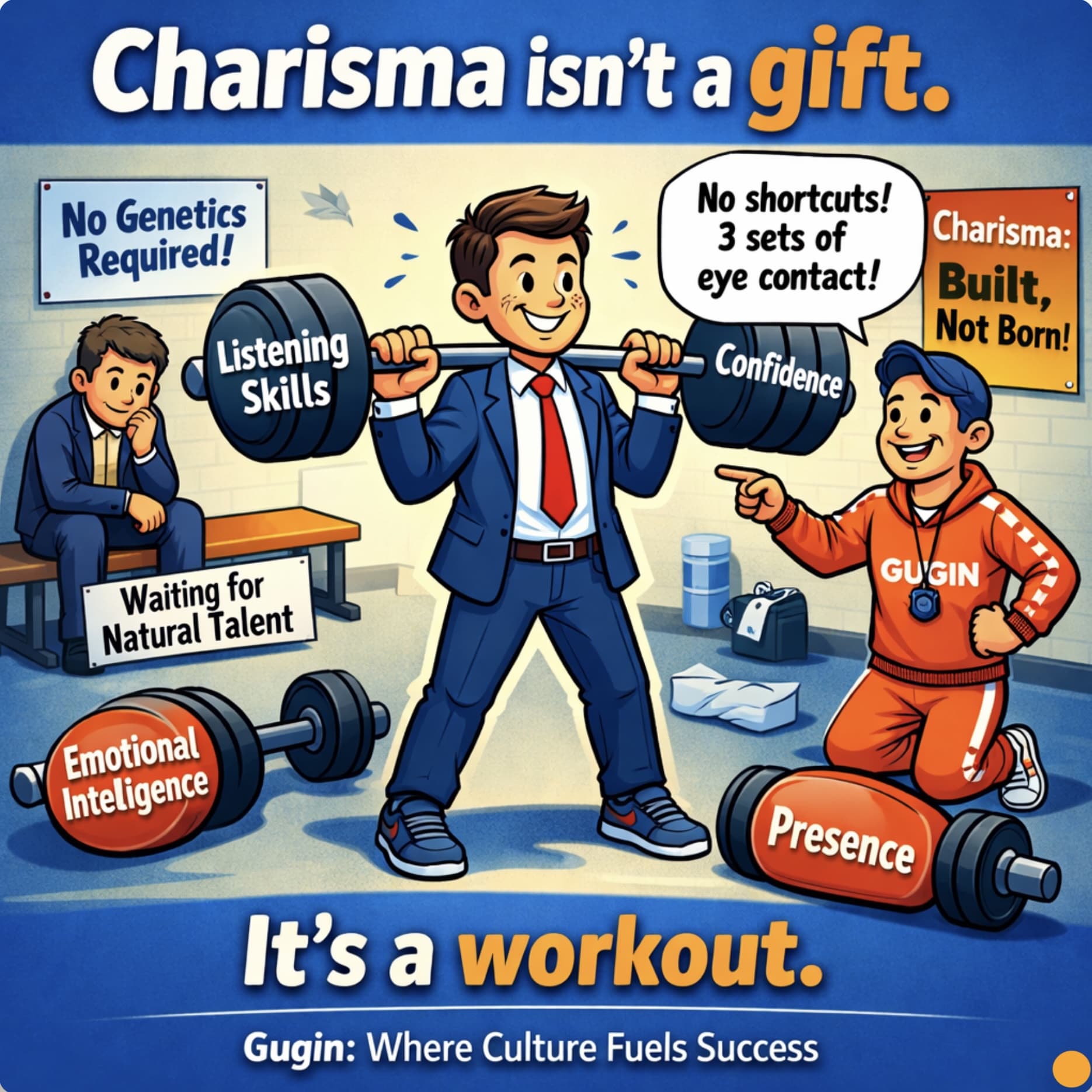
Charisma Is Not a Gift — It’s a Skill. Here’s How Gugin Teaches It.
What separates a good leader from one who truly moves people? Research — and decades of cultural intelligence practice — point to one word: charisma. And unlike talent, charisma can be learned.

Culture Audit – Get the truth about your organisation
A Culture Audit gives you crucial insight into how well your company culture is supporting your strategy and desired values. You might be in for a big surprise