What are the top 5 corporate culture challenges?
In this article, we will outline the top 5 corporate culture challenges that most managers of culturally diverse teams can relate to.
A lot of companies are sitting on their own hands because their current corporate culture isn't aligned with their strategy and strategic objectives. It eventually means that the corporate culture is counterproductive to what the company is trying to achieve. One of the most common examples we see is companies who have it as an objective to be innovative, but their culture does not foster innovation at all.
Gugin Leadership research institute has recently conducted a survey on what managers of culturally diverse teams find the most challenging. We used a broad definition of “culturally diverse” so it wasn’t limited to diversity in national cultures. The cultural challenges we identified seemed to be fairly genetic, which falls in line with what we have experienced from working with more than 600 organisations around the world.
Below are the top 5 corporate culture challenges for managers of culturally diverse teams we identified:
1. Understanding why people behave differently than expected
Most of the managers who participated in the survey have been managers for several years before they had to manage a culturally diverse team. They have been used to manage a group of people who shared the same norms, values and basic assumptions in life. Our behaviour is always an expression of our values, so when you are managing people from a different culture you have to their norms and values in order to understand their behaviour. Developing that understanding is the most challenging task managers of culturally diverse teams are facing according to Gugin's survey. See how you can become a culturally intelligent leader with intensive to the point training - anywhere in the world
2. Avoid getting frustrated and angry by the top 5 corporate culture challenges
We always compare other people's behaviour with our own norms and values. If the behaviour makes sense we accept it but if it doesn't, we reject it. Sometimes that rejection leads to frustration and hostility. As a manager, you should, of course, avoid showing frustration or hostility towards your employees' behaviour. It is, however, a challenging task according to our survey. It is often a reaction we meet when we counsel leaders on how to deal with cultural diversity, so we were not surprised to see it on this top 5 list. The reason why we end up frustrated and hostile is that we often interpret other people's behaviour incorrectly. An example: If you value always being on time you will get frustrated if some of your team members are notoriously late. Because they are usually late for appointments you might start adding attributes to their personality which are not rooted in reality but solely matches your perception of people who are always late. Instead of building a tower of prejudges try to mobilize curiosity with the purpose to uncover the underlying norms and values. When that has been achieved you might be able to reconcile the opposing views on time orientation.
Gugin's intensive, to-the-point cross-cultural training modules. We deliver them all over the world!
3. Motivating a culturally diverse team - Challenges and opportunities
What we regard as motivation is closely related to culture and it is often the case that what serves as a motivating factor in one culture is de-motivating people from another culture. That is properly the reason why motivation has found its way to our top 5 challenges for cross-cultural managers. Very often companies have a single-threaded motivation and reward systems based on the norms and values of where the company was originated. when you expand to other cultures and you bring along your motivation system you might experience a decline in efficiency and employee satisfaction because other people might feel de-motivated by the factor that you find extremely motivating. An example: Some people find it highly motivating having a huge influence on how to organize their own job. They like to know what to deliver and enjoy the freedom to figure out themselves how, when and where to get the job done. Other people, however, will feel extremely uncomfortable with that "freedom", because they will expect their manager to tell them how to do their job. In extreme situations, nothing will be done until a detailed roadmap and job description has been provided.
4. Achieve the desired level of efficiency by addressing the top 5 corporate culture challenges
A great deal of the respondents felt that it was difficult to reach the desired level of efficiency in their multicultural team because too much time is spent on sorting out misunderstandings, setting expectations and make everyone on the team pursue the same goals. The reason why this issue ends up on this list is that we initially only see one definition of efficiency. An example: In Gugin we often help our clients improve the decision processes in multicultural teams because there different views on what efficiency is. Some people value to make the decision fast and move on, while others value to take the time to analyze the situation thoroughly, consult their team and then make their decision. People who like to make decisions fast regard the consensus-oriented people as slow and inefficient. But research has shown that people who take individual decisions more often have to have to re-do their decisions than people who opt for collective decision making. So the collective decision making might take longer time, but it has better quality. In reality, we need to do both types of decisions, so reconciling the two views will lead to increased organisational effectiveness.

5. Lack of proper training on managing a culturally diverse team
And finally, the cross-cultural managers feel that they need the right tools to manage and lead a culturally diverse team. Managing diversity is an important add-on to the management skills they already have. Culturally diverse teams impose some challenges but also a lot of opportunities. If you are not trained to deal with this aspect of leadership you miss a lot of opportunities and you might ignore some cultural challenges that can disturb your goals and objectives.
What can you do about these top 5 corporate culture challenges?
We are up against our own biology and our own psychology when we are trying to overcome these challenges. From a biological point of view, it is a good thing we are sceptical towards people who are different from ourselves. Staying away from people we don't know has after all secured our survival since we climbed down from the trees on the African savannah. From a psychological point of view, most of us have been raised to be sceptical. Didn't your parents tell you "Don't talk to strangers"? They probably did. So with biology and psychology against us, how can we learn to be open to the world without acting too suicidal? It is a major question I usually always addresses when I do speeches for leaders and politicians around the world. No matter where I am, this essential question always comes up. The short answer is that the challenges we face by living in en complex, fast-moving, globalised world are many. But with the stone-age attitude that has secured our survival for thousands of years, we will perish. The reason for that is that we as a human being have become far more advanced, more intelligent. We also live much closer together than ever before and we have a lot more freedom. These three factors have made us more predictable, responsible and socially conscious. That means that the risks associated with approaching a stranger are much lower than it was 3000 years ago. So we intellectually have to educate ourselves and learn new behaviours and patterns. It is called cultural intelligence and it should be taught in all schools around the world. Unfortunately it isn't but fortunately, a lot of companies have realised the need for developing these competencies so our cross-cultural courses have become very popular over the past decade.
About Dr Finn Majlergaard
Dr Finn Majlergaard and his team are helping companies and organisations around the world leveraging cultural diversity. He is a visiting professor at several top-ranked business schools and universities across the globe where he provides insight into how cultural intelligence makes the difference between success and failure in international business. You can see his portfolio here. He can also be booked for corporate workshops and conference speeches .
Connect with Finn Majlergaard on LinkedIn
Dr Majlergaard is also a serial entrepreneur and has founded global companies like Educated Singles and Dissertation Nurse

Dr Finn Majlergaard
CEO Gugin, Professor, Author, Keynote Speaker, Author
- We align your corporate culture with your strategy.
- We take you safely through major changes in your organisation.
- We develop the crucial cultural intelligence in your organisation by training your employees and leaders
- We help you develop a competitive advantage with a unique corporate culture
Gugin has helped more than 600 companies around the world creating a winning corporate culture.

I just say things as they are…
I just say things as they are – is a phrase we often hear. It reveals that the person saying it has very low cultural and emotional intelligence
Cross-Cultural Team Development in the Southern French Alps
Team development in the southern French Alps is a great way to develop your cultural competence is in your team together with the Gugin experts
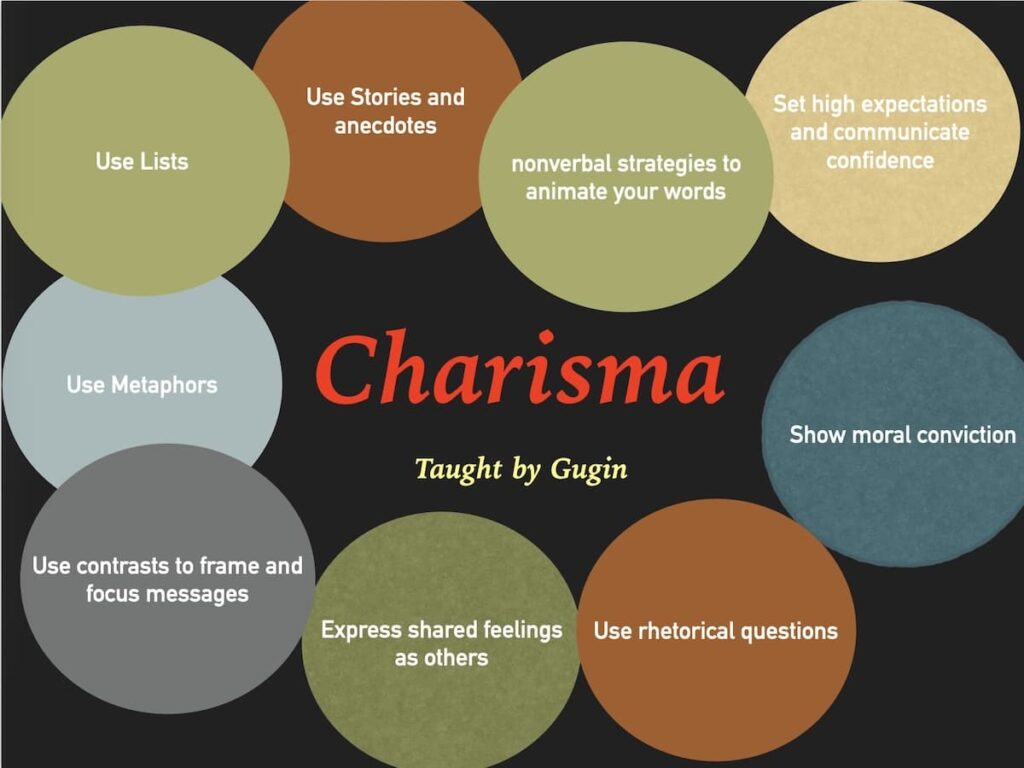
Charisma Is Not a Gift — It’s a Skill. Here’s How Gugin Teaches It.
What separates a good leader from one who truly moves people? Research — and decades of cultural intelligence practice — point to one word: charisma. And unlike talent, charisma can be learned.
Culture Audit – Get the truth about your organisation
A Culture Audit gives you crucial insight into how well your company culture is supporting your strategy and desired values. You might be in for a big surprise
USA walk from one disaster to another as it lacks emotional- and cultural intelligence
USA walk from one disaster to another as it lacks emotional- and cultural intelligence. As the world is becoming multipolar, USA is a a lot more disasters that only in their wars.
Why EU Defence Collaboration Depends on Cultural Intelligence
Emotional and cultural intelligence are key to successful EU defence collaboration, enabling trust, cohesion, and innovation across borders.
Learn how to create an inclusive workplace culture
This Gugin video teaches you how you can create an inclusive workplace culture so you get motivated, satisfied and innovative employees in your organisation
Take the test – How culturally intelligent are you really?
How culturally intelligent are you? Take this simple test and get and idea. It is one of many small tests Gugin uses in its leadership training
Cross-Cultural Training – crucial for your company’s success
Cross-cultural training boosts your success by enhancing communication, reducing conflict, and building culturally agile teams. Here is why Gugin leads the way.
Effective cross-cultural training – empower your people
Unlock your organisation’s potential with cross-cultural training that builds understanding, boosts collaboration, and drives inclusive, high-performing teams.
Fear as a Management tool? – Take the Survey
How often do you use fear to motivate? In the Gugin, we are about to start researching on how, when and why we as managers use fear as a management tool
Toxic workplace culture is a sign of bad leadership
A toxic workplace culture can be devastating for an organisation, but fixing it can be challenging as we often get used to the toxic environment
Hello there you there
Tell us why you are here and win a FREE copy of the book "Creating Competitive Advantage from Cultural Diversity"
This particular page is extremely popular in. We want to understand why, so we will be grateful if You will tell us why you are here, how you got here and what you are looking for.
In return, we make a draw each month where you can win a copy of the book "Creating Competitive Advantage from Cultural Diversity" (Valued 74 USD)
If you want to buy it you can get in on Amazon here