

Why Employee Satisfaction Matters More Than Ever
We raise the question of employee satisfaction because of a large survey we recently conducted for a client, which revealed some surprising—and concerning—results. While the findings require further research, we are sharing our initial conclusions here because they could have wide-reaching implications for how organisations approach motivation, wellbeing, and retention.
The client, whose identity and industry have been anonymised, generously allowed us to share the results, provided the company could not be identified. We are thankful for this permission, especially given the insights we gained—insights we had never encountered before in our decades of research on employee satisfaction.
Background: Investing in Wellbeing and Employee Satisfaction
Over the past seven years, the company invested heavily in building a state-of-the-art headquarters. They also implemented a motivation and reward system inspired by Gugin’s guidance: highly individualised incentives combined with team-based performance recognition and cultural development rewards.
Their objective was to enhance employee satisfaction and make working life as smooth and enjoyable as possible. Employees had access to chef-prepared dinners to take home, spa and wellness facilities, and a broad team of coaches available for personal or professional concerns. In short, no expense was spared to create a workplace paradise.
The rationale was clear: attract and retain the best talent in a fiercely competitive market. And by all accounts, they succeeded—perhaps too well.
Cracks Beneath the Surface: When Employee Satisfaction Meets Private Life
Despite these efforts, an unexpected trend emerged: a rise in resignations. Exit interviews provided no conclusive answers. So, the company engaged us once more to conduct a cultural assessment. When we compared it with the previous one, we found no major changes.
We started looking for deeper patterns and discovered something striking: most of the employees leaving were either in relationships or married. Curious, we decided to break new ground with a survey aimed not at the employees—but at their spouses.
The survey explored perceptions of work-life balance, flexibility, benefits, and the overall impact the company had on employees’ private lives. Here are the key results:
52% of spouses said their partner spent too much time working and struggled to prioritise relationships and family.
34% felt they were “competing” with the company for their partner’s attention, suggesting the company offered a more exciting or fulfilling environment than home life.
Still, 68% appreciated the company’s extensive commitment to its employees.
The Motivation–De-Motivation Paradox
These findings point to a fascinating paradox: could excessive focus on workplace wellbeing and employee satisfaction actually lead to personal dissatisfaction elsewhere?
This brings us to a crucial point in motivational theory. Classic models such as Herzberg’s Two-Factor Theorydistinguish between hygiene factors (e.g. salary, working conditions) and true motivators (e.g. recognition, responsibility). Over-saturating the workplace with rewards and attention may shift the motivational balance, inadvertently leading to de-motivation in other areas of life.
Moreover, according to Self-Determination Theory (see Ryan & Deci, 2000), autonomy, competence, and relatedness are key to sustained motivation. When a company tries to control all three aspects—particularly relatedness—it may unintentionally undermine relationships outside of work, impacting employee satisfaction in the long term.
Employee Satisfaction: A Delicate Balance
So, what’s happening here? Perhaps employees in relationships leave not because of the job itself, but because the job begins to interfere—subtly or explicitly—with their private life and emotional priorities. The company becomes too much of a good thing.
We acknowledge this is a hypothesis that requires more evidence. We are currently seeking companies from different industries and countries to explore this pattern further. If your organisation is interested in contributing to this ongoing research, please get in touch with the Gugin Research Unit.
Share Your Experiences
Have you seen similar patterns in your organisation? We would love to hear your views. Please share your thoughts in the comment section below to help us expand the understanding of this emerging dimension of employee satisfaction.
By exploring the boundaries between motivation and over-motivation, between satisfaction and imbalance, we can better support both individuals and organisations in creating sustainable, fulfilling work environments.

I just say things as they are…
I just say things as they are – is a phrase we often hear. It reveals that the person saying it has very low cultural and emotional intelligence

Cross-Cultural Team Development in the Southern French Alps
Team development in the southern French Alps is a great way to develop your cultural competence is in your team together with the Gugin experts

Cultural Intelligence: 5 ways to test a person’s level
We all know them - people, who have been hired because of outstanding professional and technical qualifications, but who, unfortunately, are impossible to work together with. One of the reasons why we have these "talented islans" as we call them in Gugin is because...
Cross-Cultural Leadership The Challenges and Opportunities
Cross Cultural Management is challenging to most managers. This article outlines 3 of the challenges and suggests how you can deal with them

The Real Reason Your Company Can’t Attract Young Talent — And Why It’s a Leadership Problem
companies believe their Gen Z talent problem is a recruitment issue. The research says otherwise. Discover why your ability to attract young talent comes down to one thing most organisations consistently overlook — and what emotionally intelligent leadership has to do with it.
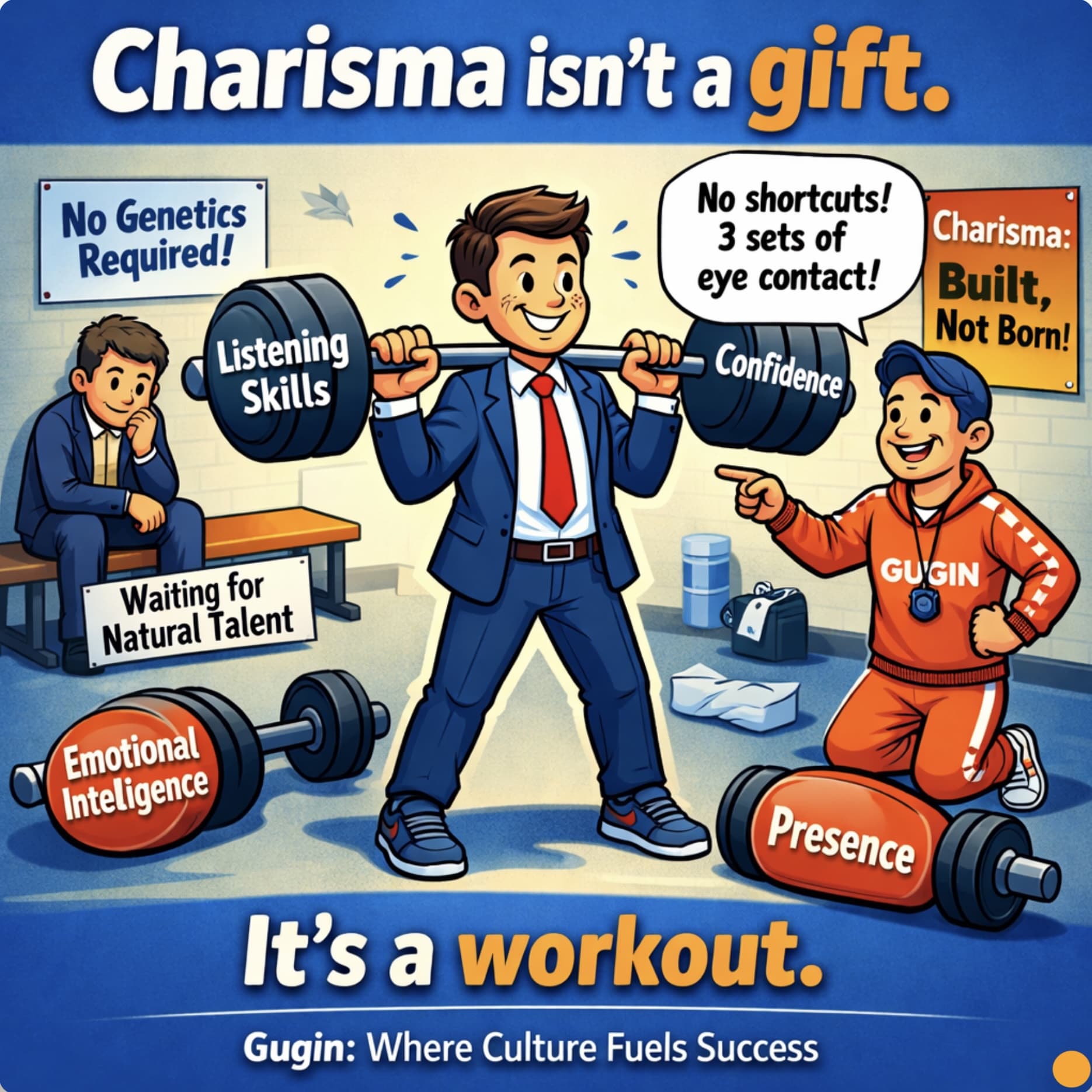
Charisma Is Not a Gift — It’s a Skill. Here’s How Gugin Teaches It.
What separates a good leader from one who truly moves people? Research — and decades of cultural intelligence practice — point to one word: charisma. And unlike talent, charisma can be learned.

Culture Audit – Get the truth about your organisation
A Culture Audit gives you crucial insight into how well your company culture is supporting your strategy and desired values. You might be in for a big surprise