
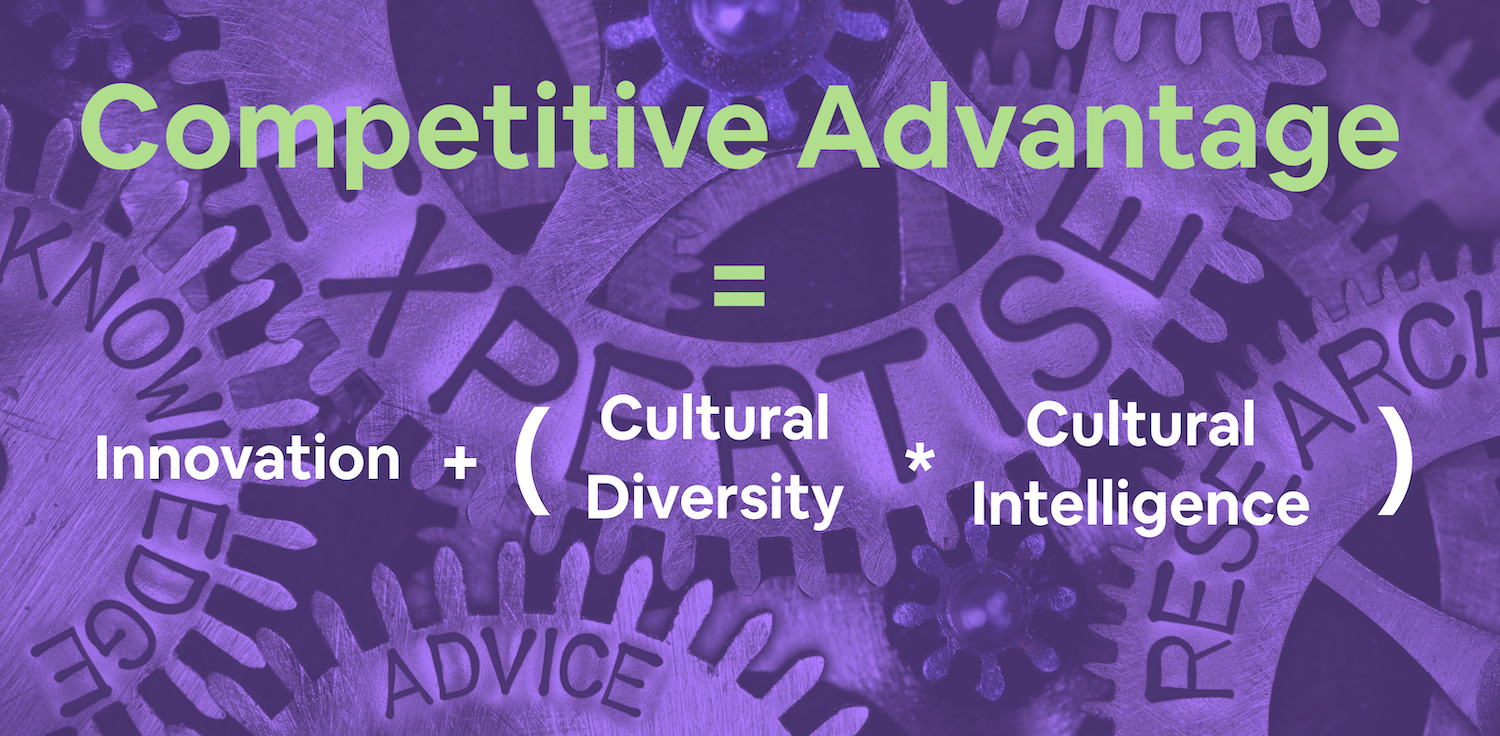
Usually, when the talk is about the competitive advantage it is approached from an economic perspective only. Over the past 19 years, Gugin has helped hundreds of companies developing competitive advantage from cultural diversity. I have even co-authored a book about it that has sold really well on a global scale. So we know that competitive advantage has to do with a lot more and far more important factors than the purely economic ones.
We know from the hundreds of assignments we have had over the years, that innovation, cultural diversity and cultural intelligence are key ingredients in cultivating competitive advantage. But we have never thought about if we could create a sort of a formula that could combine and connect all the ingredients.
So we decided to give ourselves an assignment over the holiday season. The assignment was for some of us to develop one or more formulas and for others to critically assess and test them.
Good news: We found a non-economic formula for competitive advantage
In today's world where change is happening faster than ever before and where the complexity of the world is bigger than ever before it can seem very difficult to identify and develop a competitive advantage. Companies, who have been around for centuries suddenly vanish because they didn't learn - in time - to navigate in a fast-changing and increasingly complex environment. At the time, we have companies like Amazon, Airbnb and Alibaba who didn't exist 25 years ago who are now among the biggest companies in the world. They don't produce anything, they haven't won any Nobel prizes for their inventions. The only thing they have is an understanding of how to harvest money in a fast-changing and complex world.
Irrespectively of you are a young or old company you need to be competitive. Gugin is specialised in creating competitive advantage from cultural diversity. It is a big advantage. Anyone can copy your product, but nobody can copy your culture. In order to be able to create a competitive advantage, you need to have three ingredients; innovation, cultural intelligence and cultural diversity. We then believe the formula for cultural intelligence will look like something this:

The relationship between cultural intelligence and cultural diversity
A lot of people, organisations, researchers and leaders are talking about diversity and for some people, diversity is even restricted to gender diversity. Many of those people who are talking about diversity think that diversity in itself gives a competitive advantage. Nothing could be further from the truth. If you have no knowledge about how to leverage the cultural diversity you will not see any improvement at all - in fact, you may experience increased cultural friction, which leads to lower performance and more dissatisfied employees.
On the other hand, if you have a high level of cultural intelligence but no diversity you won't gain anything either. So you need to have both diversity and cultural intelligence in order to build and develop competitive advantage and a strong resilient corporate culture.
A common misperception about diversity
it has become common knowledge that diversity is good for the competitive advantage, employee satisfaction level, profitability, etc. Unfortunately, a lot of people think diversity is only about gender diversity. But that is a wrong assumption. In fact, all kinds of diversity lead to improved competitive advantage e.g. different age-groups, different educational backgrounds, different nationalities, different genders, different professions, etc. So when you are looking at how increased diversity can improve your organisation's performance, then you have to look a lot broader than juster gender.
What is Innovation?
There is often confusion between the terms innovation and creativity. In short, creativity is just coming up with ideas while innovation is developing ideas for a particular purpose e.g. developing a new product, improving customer service or develop a new sales channel. So, in short, we can define innovation as:
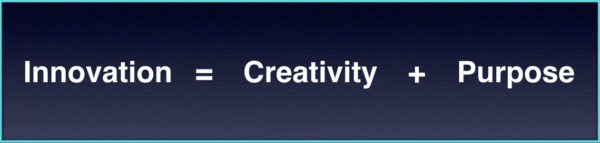
In most situations, the purpose will be embedded in the company's strategy or mission. In this article, the purpose is how we can improve competitive advantage. And the direction is utterly important. Only if you stay focused on your objective you can prioritise your ideas and work on those who serve the purpose best. When we work with our client developing cross-cultural competencies we often hear, "I/we are not creative or innovative". But that is not true. Unlike what most people believe creativity is not a special gift you are born with. Being creative or innovative is in fact a very structured process that everybody cam - and should - learn. If you are interested you can learn more about our innovation workshop here.
How to target innovation towards improving competitive advantage
The first thing you have to do is deciding whether you want to become best or cheapest. You can't be both. When you have made that important choice you will have to determine which factors are contributing to gaining competitive advantage. you might want to look at what your competitors are doing, but benchmarking is a very bad path to pursue if you want to get ahead of the game. Follow in other peoples' footsteps will never bring you in front.
So you must have the confidence and courage to try something new. We work with 3 types of innovation
- Paradigm preserving Innovation
- Paradigm stretching Innovation
- Paradigm breaking Innovation
I will not go into details with the differences here, but just illustrate that every step towards becoming innovative is a structured process everybody can follow. We do of course cover that in our innovation workshops.
What can you do to increase the competitive advantage of my organisation?
First, you have to assess your own situation. How much diversity and cultural intelligence do you have. And how good are you to innovate? It can, of course, become very difficult getting a truthful answer to these questions. Your view on your own organisation's capabilities is biased in either one or the other direction. A better option will be to ask your external and internal stakeholders. Ask your customers if you dare. Ask your suppliers. Ask your employees at all levels.
A third option is you can ask for external help. It has a number of advantages. Firstly, an external company is not biased towards your company. They will have a more holistic and honest view of your organisation. Secondly, it is our experience that the people you ask are more likely to be open and frank if they are talked to an independent, external consultant, rather than an internal resource.
We call it the cultural due diligence process because it is a process where we assess and quantify all the parameters that contribute to your company culture. That includes your ability to innovate and the level of cultural intelligence in your organisation.
Please get in touch if you want to discuss further or if you have a question. We will be happy to help

Dr Finn Majlergaard
CEO Gugin, Professor, Author, Keynote Speaker, Author
- We align your corporate culture with your strategy.
- We take you safely through major changes in your organisation.
- We develop the crucial cultural intelligence in your organisation by training your employees and leaders
- We help you develop a competitive advantage with a unique corporate culture
Gugin has helped more than 600 companies around the world creating a winning corporate culture.


I just say things as they are…
I just say things as they are – is a phrase we often hear. It reveals that the person saying it has very low cultural and emotional intelligence
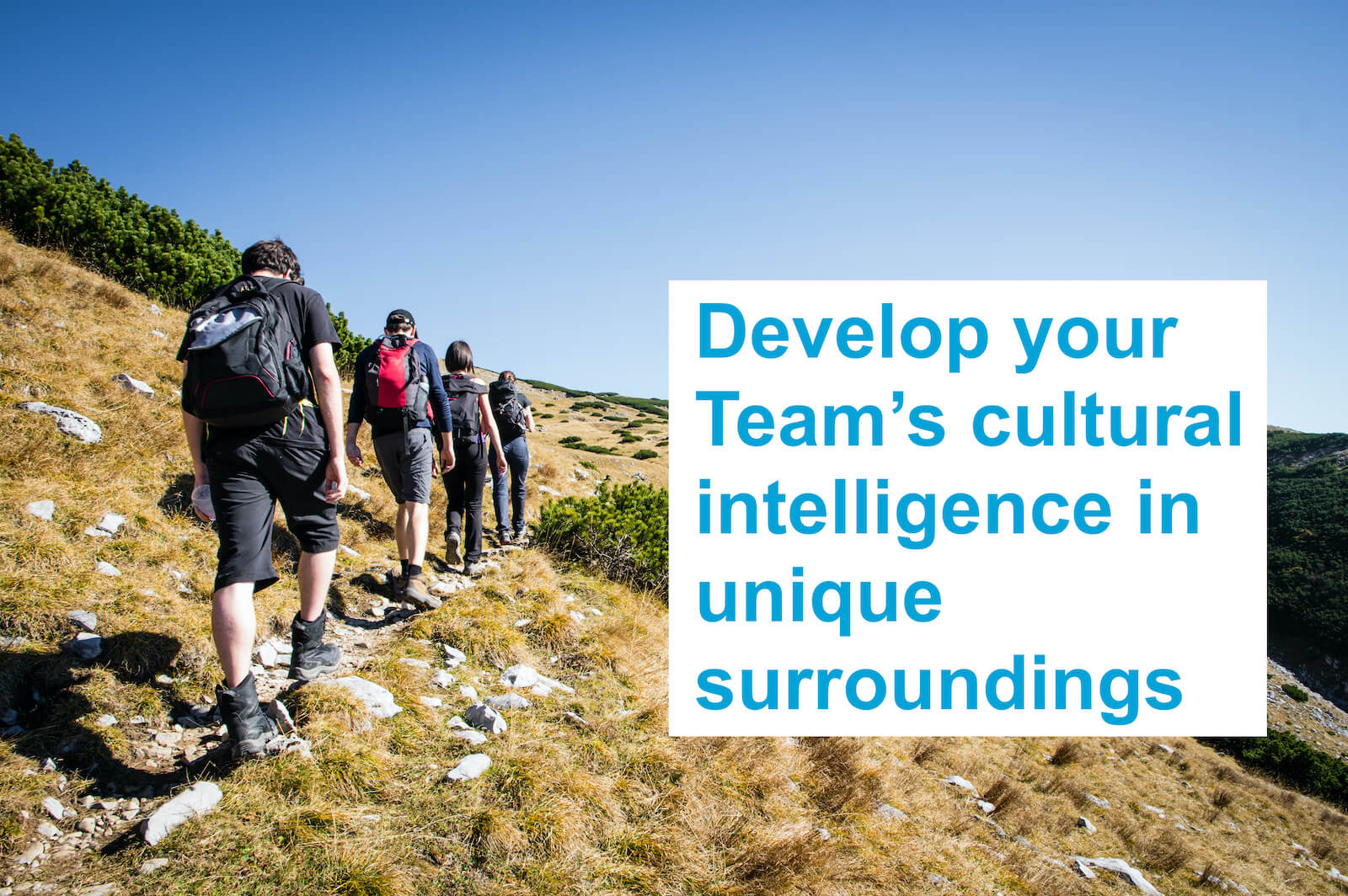
Cross-Cultural Team Development in the Southern French Alps
Team development in the southern French Alps is a great way to develop your cultural competence is in your team together with the Gugin experts
Cultural Intelligence: 5 ways to test a person’s level
We all know them - people, who have been hired because of outstanding professional and technical qualifications, but who, unfortunately, are impossible to work together with. One of the reasons why we have these "talented islans" as we call them in Gugin is because...
Cross-Cultural Leadership The Challenges and Opportunities
Cross Cultural Management is challenging to most managers. This article outlines 3 of the challenges and suggests how you can deal with them

The Real Reason Your Company Can’t Attract Young Talent — And Why It’s a Leadership Problem
companies believe their Gen Z talent problem is a recruitment issue. The research says otherwise. Discover why your ability to attract young talent comes down to one thing most organisations consistently overlook — and what emotionally intelligent leadership has to do with it.
Charisma Is Not a Gift — It’s a Skill. Here’s How Gugin Teaches It.
What separates a good leader from one who truly moves people? Research — and decades of cultural intelligence practice — point to one word: charisma. And unlike talent, charisma can be learned.

Culture Audit – Get the truth about your organisation
A Culture Audit gives you crucial insight into how well your company culture is supporting your strategy and desired values. You might be in for a big surprise